


Osteopathy
What if the painful area isn’t actually the whole problem?
You might have tried stretching, massage, exercises or painkillers. Perhaps they helped for a while — but the problem keeps coming back.
That’s frustrating. And it’s usually a sign that it’s worth looking at the bigger picture.
Osteopathy is a hands-on approach to assessing and treating problems affecting your muscles, joints and movement. As a registered osteopath, Sally looks beyond simply asking “Where does it hurt?”
She wants to understand:
- What happened in the first place?
- How is your body moving now?
- Have you had previous injuries?
- What activities are important to you?
- And what might be keeping the problem going?
Your treatment is tailored to you. Depending on what you need, this may include joint mobilisation or manipulation, soft-tissue techniques, stretching and other hands-on approaches.
But treatment isn’t just about what happens on the treatment table.
You’ll also be given practical advice where appropriate, so you understand what you can do between appointments to support your recovery and get back to doing the things that matter to you.
Osteopaths are degree-qualified healthcare professionals and are regulated by the General Osteopathic Council (GOsC). They are recognised as allied health professionals by the NHS in England.
Not sure whether osteopathy is right for you?
You don’t need to work that out before you arrive.
Your initial assessment is about understanding what’s happening and deciding together what approach is most appropriate.

Frequently Asked Questions
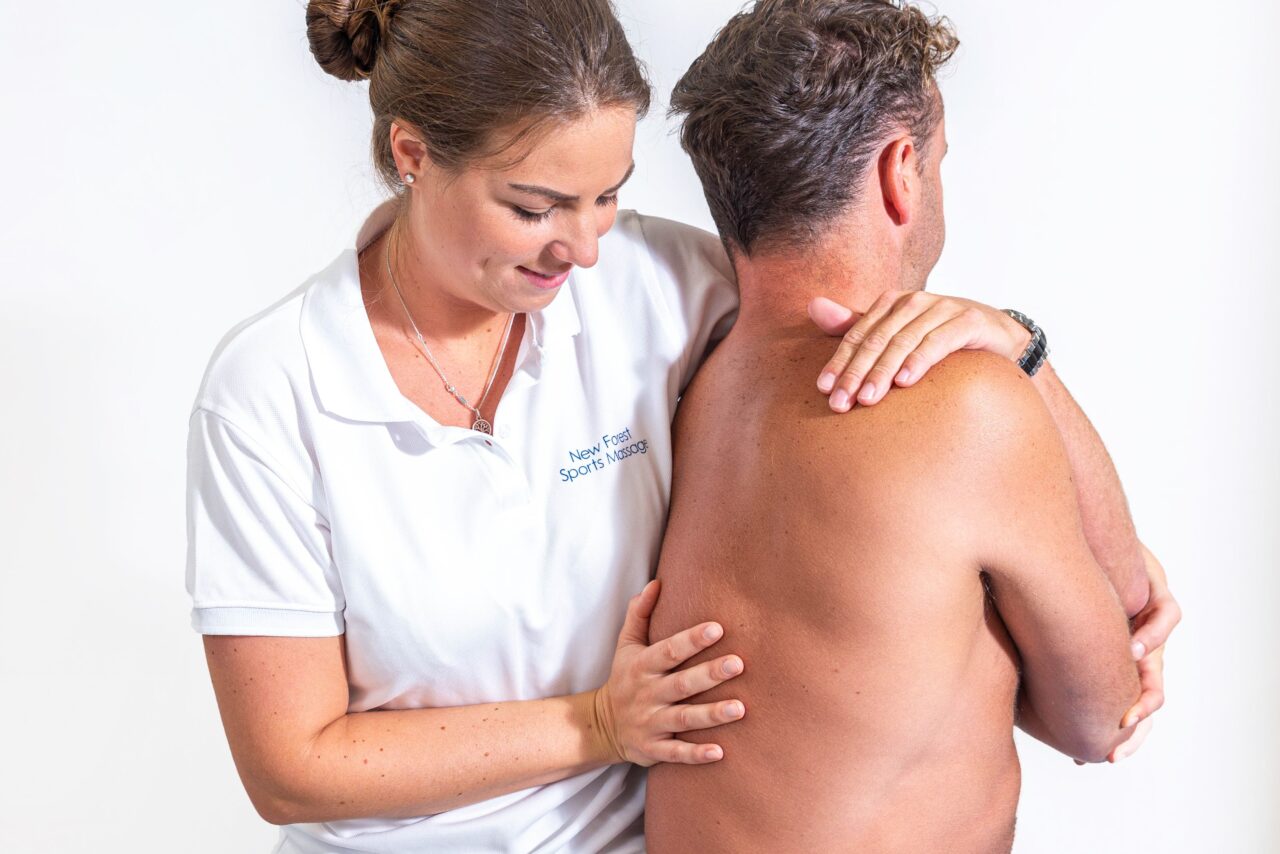
Sports & Remedial Massage
Your muscles don’t always need to be “worked harder”.
Sometimes they need the right treatment at the right time.
Whether you’re training regularly, recovering from an injury, spending long hours at a desk or simply carrying too much tension, sports and remedial massage can be adapted around what your body needs.
Sally uses different techniques, pressures and approaches rather than giving everyone the same treatment.
The aim?
To help you feel better when you leave than when you walked through the door.
Treatment can help ease muscle tension, support recovery and improve how freely you move.
And if you’re already seeing another healthcare professional, massage can also complement your wider treatment plan.
Wondering if you need massage or osteopathy?
That’s a common question.
You don’t have to diagnose yourself.
Tell Sally what’s going on, what you’ve tried and what you’d like to get back to doing. From there, you can work out the most appropriate next step.
NeuroKinetic Therapy
What if your body has learned a movement pattern that is no longer helping you?
This is where NeuroKinetic Therapy (NKT) can be particularly interesting.
NKT uses muscle testing to explore the relationship between your muscles, movement patterns and nervous system.
Rather than simply treating the place that hurts, Sally looks at the possibility that another part of your body may be contributing to the problem.
Think about a golfer with persistent pain on one side of their lower back.
The obvious approach might be to keep treating the back.
But what if the back is working too hard because another part of the movement pattern isn’t doing its share?
That’s the question NKT helps us investigate.
Your injury history, posture, habits, sport and previous experiences can all influence the way your body moves.
NKT provides another way of exploring those relationships.
Sally has used muscle-testing approaches for many years and combines NKT with her wider experience in osteopathy and movement.
And then what?
You won’t simply be told what is “wrong”.
You’ll be helped to understand what has been identified and, where appropriate, given simple exercises to practise at home.
The goal is to help your body learn a more efficient movement pattern — not to leave you dependent on treatment.
Could NKT be worth exploring?
If you’ve been dealing with persistent pain, an old injury or a movement problem that doesn’t seem to completely resolve, it may be worth looking beyond the painful area.
Neurological Integration System
What if you’ve treated the symptom — but something keeps bringing it back?
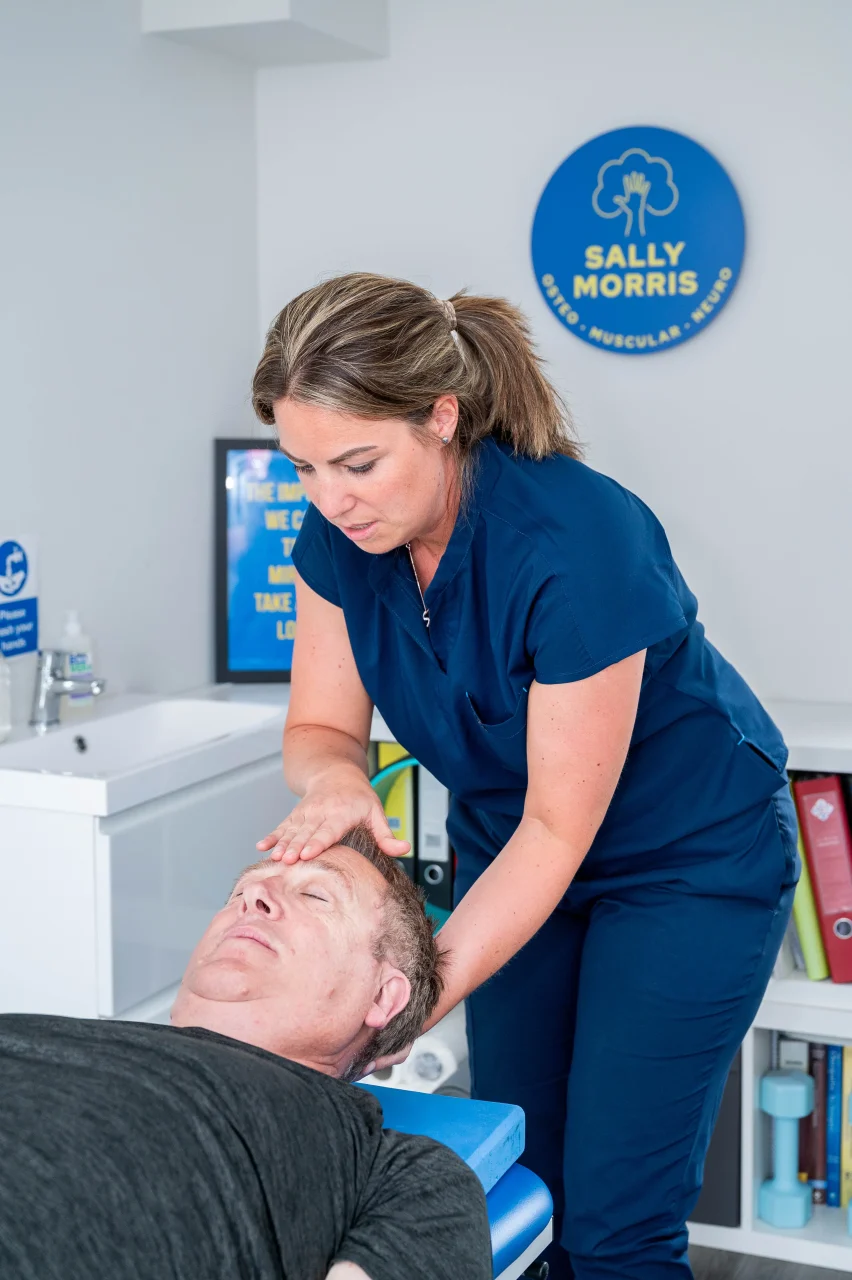
Neurological Integration System (NIS) is a gentle, non-invasive approach that uses muscle-response testing to explore patterns involving the nervous system.
The idea is simple:
Your nervous system plays a role in how your body coordinates, responds and adapts.
During a session, Sally uses specific muscle-response tests to explore how your body responds to different neurological and physiological patterns.
This can provide another perspective when symptoms are persistent, complex or difficult to explain.
NIS is particularly gentle and does not require you to undress, which can make it an appealing option for people who prefer a lighter-touch approach.
What can you expect?
There is no complicated preparation.
Sally will first listen to your history and understand what you’re experiencing. She’ll then use muscle-response testing to explore areas that may be relevant to your symptoms.
The important part is that you’re involved in the process.
Sally will explain what she’s doing, why she’s doing it and what she finds.
NIS can be used as a standalone approach or alongside other treatments where appropriate.
Why consider NIS?
It may be worth exploring if:
- You’ve had a problem for a long time.
- Your symptoms don’t seem to have an obvious explanation.
- You’ve tried other approaches without getting the lasting change you hoped for.
- You prefer a gentle, non-invasive treatment.
- You want to explore the bigger picture rather than continually treating the same painful area.
You don’t need to decide whether NIS is right for you before booking.
That’s what the assessment is for.

Why I combine these approaches
What if the thing that hurts isn’t the thing that’s causing the problem?
That’s an important question.
Your body isn’t a collection of separate parts. The way you move can be influenced by previous injuries, your activity levels, your habits, your nervous system and the demands you’re putting on your body.
So rather than automatically treating the painful area, Sally takes time to understand the person attached to the symptom.
That might mean osteopathy is the right approach.
It might be massage.
It might be NKT or NIS.
Or it might be a combination.
There isn’t a prize for choosing the “right” treatment before you walk through the door.
Your job is to tell Sally what’s happening.
Sally’s job is to help you understand what might be contributing — and work out what makes sense from there.
Not sure which treatment you need?
That’s okay. You don’t have to know.
In fact, trying to diagnose yourself before you book may be making things harder than they need to be.
Your initial assessment is about having a conversation, understanding what’s going on and deciding what is most likely to help.
You bring the problem.
We’ll work out the approach together.
Let’s work it out together.